
So, what’s the real difference between seeing a manual therapist and seeing a physiotherapist? It boils down to one key thing: a manual therapist focuses on the spine's connection to the nervous system using precise adjustments, while physiotherapy takes a broader view, focusing on movement, rehabilitation, and overall physical function.
Choosing between them depends on whether you need targeted joint care or a wider rehabilitation programme for your muscles, nerves, and movement patterns.
Understanding Core Philosophies and Goals
When you're dealing with pain or an injury here in the UK, getting your head around the foundational principles of different therapies is a massive first step. Two of the most common hands-on approaches, spinal manipulative therapy and physiotherapy, often get lumped together but they actually operate from distinctly different viewpoints. This core difference in philosophy shapes everything, from how you’re assessed to the treatment techniques they use.
Spinal manipulative therapy is built on the central idea that the body's structure—primarily the spine—governs its overall function. The main goal is to correct spinal joint misalignments, which are believed to interfere with the nervous system and, as a result, affect your general health. Practitioners use specific, hands-on adjustments to restore proper joint mobility and help your nervous system function as it should.
In contrast, physiotherapy is grounded in a broader, science-based model of health. It’s not limited to a single system but looks at the whole person. The primary goal here is to restore movement and function when someone is affected by injury, illness, or disability. This can involve anything from post-surgical recovery to managing chronic conditions like arthritis or sports injuries.
The key distinction really lies in the scope. Spinal manipulative therapy is highly specialised, zeroing in on the neuromusculoskeletal system and spinal health. Physiotherapy offers a much wider, more varied approach to physical rehabilitation across the entire body.
This means a physio's toolkit is packed with things like exercise prescription, patient education, and manual therapies, all designed to empower you in your own recovery.
The table below gives you a quick snapshot of these contrasting philosophies.
Comparing Core Philosophies
This table offers a quick summary of the foundational principles guiding each therapy.
| Focus Area | Spinal Manipulative Therapy | Physiotherapy |
|---|---|---|
| Primary Goal | Restore joint function and nerve communication, primarily via the spine. | Improve movement, function, and quality of life for a wide range of conditions. |
| Core Belief | Proper spinal alignment is key to overall health and nervous system function. | Movement and exercise are central to health, rehabilitation, and injury prevention. |
| Treatment Scope | Specialised focus on joints, particularly the spine and related structures. | Broad scope including musculoskeletal, neurological, and respiratory conditions. |
Ultimately, understanding these core differences is the first step in deciding which path is right for your specific needs and health goals.
Comparing UK Training Regulation and NHS Access
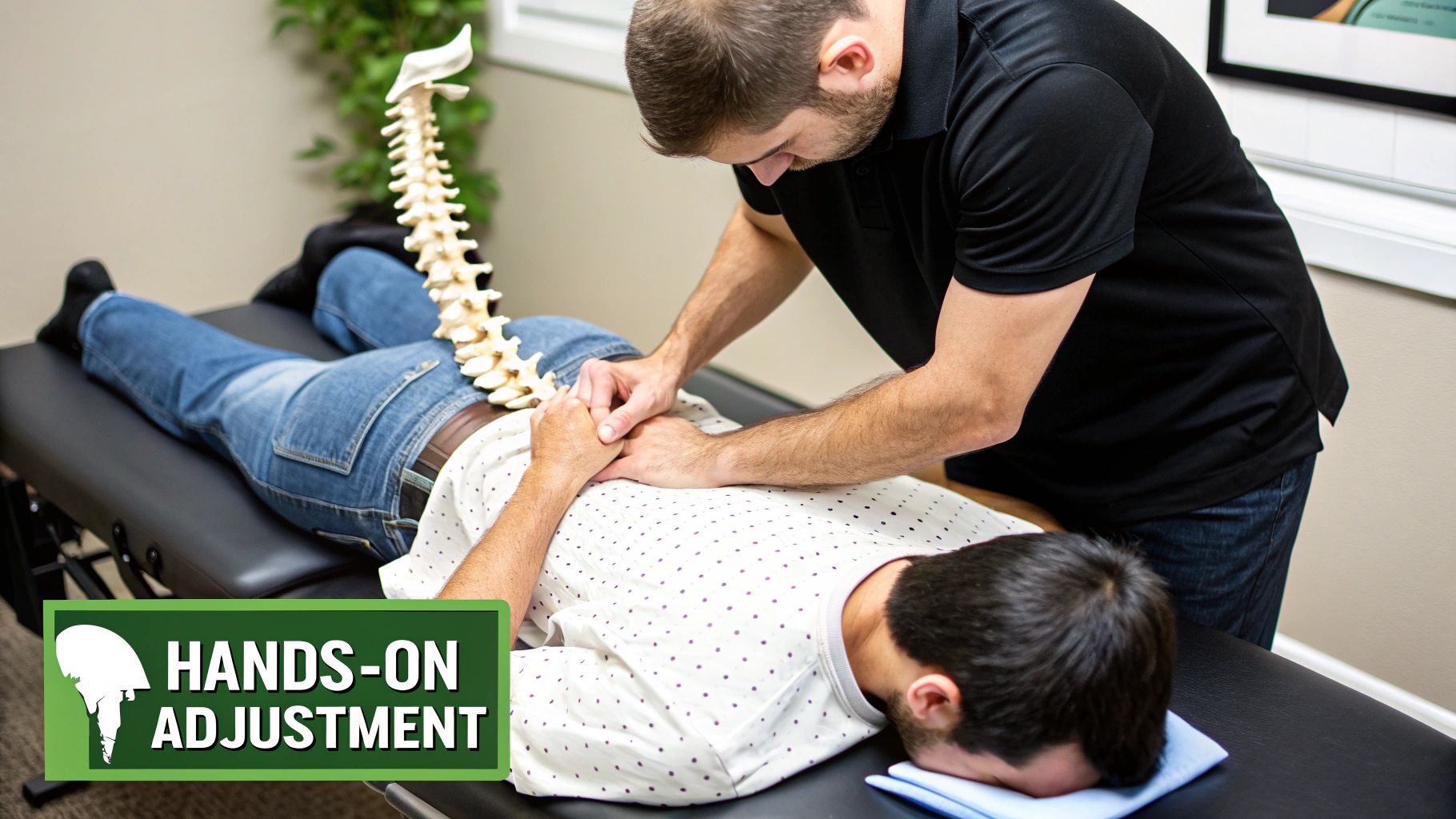
Before you put your health in someone's hands, it’s only natural to want to know about their background. In the UK, both physiotherapists and manual therapists are highly trained professionals, but how they get there—and how you can access them—is a different story.
Understanding their educational paths, the bodies that regulate them, and their availability through the National Health Service (NHS) is crucial for making a confident choice.
A manual therapist’s journey typically involves a dedicated four to five-year degree programme. This is an intensive deep dive, focusing almost entirely on the neuromusculoskeletal system, with a huge emphasis on diagnostic skills and the specific adjustment techniques for the spine and joints.
Physiotherapists, on the other hand, usually complete a three-year degree. Their training is much broader by design, covering not just musculoskeletal care but also essential fields like respiratory, neurological, and cardiovascular rehabilitation. This prepares them for a wide variety of roles across the healthcare spectrum.
Regulatory Bodies and Professional Standards
Here’s a reassuring fact: to practise legally in the UK, both professions must be registered with a statutory regulatory body. These organisations exist to protect the public by ensuring every practitioner meets high standards of care.
- For Physiotherapists: The governing body is the Health and Care Professions Council (HCPC). The HCPC is a multi-profession regulator, ensuring physios meet national standards for their training, professional skills, and conduct.
- For Spinal Manual Therapists: Their profession is regulated by a specialist body, the General Council for their field. This body sets the standards for education, practice, and professional conduct, ensuring patient safety is paramount.
The key takeaway? Both professions are subject to statutory regulation in the UK. This means any registered practitioner, whether a physio or a manual therapist, must follow a strict code of ethics and commit to ongoing professional development to stay on the register.
Availability on the NHS
This is where things get very practical for most people. The way these professions are trained and structured has a direct impact on how you can access them through the UK's public healthcare system.
Physiotherapy is a cornerstone of NHS services. It’s widely available, usually after a referral from a GP, making it the go-to option within the public system.
Spinal manipulative therapy, however, has much more limited availability on the NHS. For the most part, it operates in the private sector. This means that while physiotherapy is often the more accessible route through public health, manual therapy is typically sought out directly by patients.
As you can see on crestacreclinic.co.uk, this clear difference in NHS provision often shapes how and when patients choose one therapy over the other.
A Practical Look at Treatment Techniques
So, when you book a session for back pain, what actually happens in the treatment room? The difference between manual therapies often boils down to the hands-on techniques each practitioner uses. Understanding these practical approaches can help you picture your path to recovery and set clear expectations.
One approach is highly specialised, centring almost entirely on the spine and joints. The goal here is to restore mobility to joints that are restricted or not moving properly. A common technique is the high-velocity, low-amplitude (HVLA) adjustment, which involves a quick, precise thrust. This often produces a "popping" sound as gas is released from the joint, and it's designed to improve joint function and take pressure off nerves.
Of course, it’s not all about the ‘crack’. Gentler methods, like spinal mobilisation, use rhythmic movements to achieve a similar goal without the quick thrust. For specific issues like a bulging disc, these precise methods can be particularly effective. You can find out more about how a spinal specialist can help with bulging discs in our detailed guide here: https://spinebodyhealth.co.uk/can-a-chiropractor-help-with-bulging-discs/
Physiotherapy, on the other hand, comes at the problem with a much broader toolkit, viewing it through the lens of overall movement and function.
A physio-led session for the very same back pain might look quite different. It would likely include:
- Manual Therapy: This could involve soft tissue massage, joint mobilisations, and stretching to ease muscle tension and improve flexibility around the sore spot.
- Prescribed Exercise: This is the real cornerstone of physiotherapy. You’ll be given a specific set of exercises designed to strengthen the muscles supporting your back, improve your posture, and stop the injury from coming back.
- Education: A huge part of the session is dedicated to helping you understand what’s gone wrong, how to modify your daily activities, and how to take an active role in your own recovery.
The image below highlights that both fields are staffed by certified professionals, ensuring you always receive care from a qualified practitioner.

This just underscores that whichever path you choose, your care is in the hands of someone who has completed rigorous training and is certified to practise.
A Side-by-Side Look at Common Techniques
To make things clearer, let’s break down the typical methods you’d encounter in each type of clinic. While there’s some overlap, the core focus of each treatment session is often quite distinct.
| Technique Category | Spinal Manipulative Therapy | Physiotherapy |
|---|---|---|
| Primary Focus | Restoring joint mechanics and nerve function, primarily through spinal adjustments. | Improving overall body movement, strength, and function through rehabilitation. |
| Key Methods | High-velocity adjustments (HVLA), spinal mobilisation, drop-table techniques. | Prescribed exercises, soft tissue massage, stretching, ultrasound, education. |
| Patient Role | More passive role during adjustments, with some follow-up exercises. | Very active role, centred on performing a prescribed exercise programme. |
| Typical Tools | Adjustment table, activator tool. | Exercise bands, weights, balance balls, ultrasound machines. |
Ultimately, one approach zeroes in on the specific joint mechanics, while the other rebuilds the body's functional support system.
How Techniques Differ in Practice
Let's use a real-world example: chronic lower back pain.
A manual therapist might identify a specific lumbar vertebra with restricted movement. Their focus would likely be on using a series of adjustments over several sessions to restore its normal motion, aiming to reduce nerve pressure and, in turn, the pain.
A physiotherapist, looking at the same problem, might identify weak core muscles and poor postural habits as the root cause. Their treatment plan would be built around a programme of strengthening exercises, manual therapy to release tight muscles, and education on ergonomics for your desk and home.
The fundamental difference lies here: one approach directly addresses joint mechanics with precise adjustments, while the other rebuilds the body's functional support system through movement and rehabilitation.
It's true that both professions may use overlapping manual therapy techniques to sort out tight muscles and connective tissue. If you're interested in a deeper dive into specific manual techniques, you can explore more about myofascial release therapy for pain relief. In the end, the right choice often depends on whether your problem stems from a specific joint issue or a broader functional one.
Matching Your Condition to the Right Therapy

When you're in pain, picking the right treatment can feel overwhelming, but understanding where each therapy shines makes the decision much clearer. While both spinal manipulative therapy and physiotherapy are brilliant at managing common problems like back and neck pain, they have very different areas of expertise. One is highly focused, while the other takes a much broader approach.
So, how do you choose? The main difference often boils down to a simple question: are you dealing with a specific joint or spinal problem, or a wider issue that involves muscle function, movement patterns, and long-term rehabilitation?
When to Consider Spinal Manipulative Therapy
This specialised, hands-on therapy really comes into its own when your pain is clearly linked to joint mechanics, especially in the spine. Manual therapists are trained to pinpoint and address specific joint restrictions that can lead to pain, stiffness, and even nerve irritation.
This focused approach is a great fit for conditions like:
- Sciatica: Where nerve pain often starts with a problem in the lower back.
- Whiplash: After an accident, precise adjustments can help restore normal, pain-free movement in the neck joints.
- Tension Headaches: These are frequently connected to stiffness and poor function in the neck and upper back.
- Localised Joint Pain: For distinct issues in areas like the sacroiliac joint or a specific vertebra in your spine.
The real strength here is the precise, targeted treatment of joint dysfunction. If your symptoms point to a specific "stuck" or misaligned joint causing your discomfort, this is often the most direct and effective path to relief.
When Physiotherapy Is the Better Fit
Physiotherapy's scope is considerably wider, making it the go-to choice for a huge range of health concerns that go well beyond simple joint mechanics. At its heart, it’s a rehabilitative science focused on restoring movement, strength, and overall function to the entire body.
Physiotherapy is often the best path for:
- Post-Surgical Rehabilitation: It's essential for getting back on your feet after procedures like knee or hip replacements.
- Sports Injuries: It effectively addresses muscle tears, ligament sprains, and tendon problems with targeted exercise programmes.
- Stroke Recovery: Physios help patients regain movement and independence through specialised neurological rehabilitation.
- Chronic Conditions: It's key for managing long-term issues like arthritis or chronic obstructive pulmonary disease (COPD).
A physiotherapist will give you the tools for long-term self-management. For instance, alongside hands-on treatment for lower back pain, they'll teach you specific routines to build strength and prevent future flare-ups. You can learn more about these key movements in our guide to exercises to strengthen lower back.
Ultimately, a spinal-focused approach like manual therapy is ideal for direct, joint-related complaints. In contrast, physiotherapy is designed for broader rehabilitation needs. By thinking carefully about the nature of your condition, you can match your health concerns with the right therapy and take a confident step towards getting better.
What to Expect: The UK Patient Journey
Knowing what to expect when you seek treatment is a big deal. In the UK, the path you take—either through the NHS or privately—can really shape your experience and the results you get.
Physiotherapy is a long-established part of the NHS. You’ll usually get a referral from your GP for all sorts of conditions. On the other hand, spinal manipulative therapy is mostly a private service, meaning patients typically find their own practitioner and pay for treatment themselves. That said, it's slowly becoming more integrated into the NHS, which is great news for people with certain musculoskeletal problems.
NHS vs Private: Who is Happier with Their Care?
Interestingly, how you access treatment might affect how satisfied you are with it. When we look at research on spinal manipulative therapy in the UK, a clear pattern emerges. More and more patients are now being referred by their NHS GP as part of new schemes designed to give people more choice in their muscle and joint care.
One huge study of over 8,000 patients found something quite revealing. Even though NHS-referred patients often had more complex health problems to begin with, their satisfaction levels were sky-high. An incredible 98.7% of these NHS patients said they were as satisfied or even more satisfied than they expected with their care.
This was a touch higher than the 93.7% satisfaction rate reported by private patients who referred themselves. What this tells us is that even when dealing with tougher cases, the structured care process within the NHS can lead to fantastic results. You can dive into the full research here: review the clinical outcomes in this extensive UK study.
This is a key takeaway: The high satisfaction among NHS-referred patients shows just how effective specialised manual therapies can be within our public healthcare system. It's making a real difference for people with significant musculoskeletal issues.
No matter which route you choose, the ultimate aim is always the same: getting effective relief. As you explore your options, finding a local provider you trust is the most important step. If you’re looking for specialised help with your back pain, it’s worth finding a dedicated back pain clinic near me to talk through your symptoms and goals. Understanding both the potential outcomes and the different ways to get help will put you in a much better position to decide what's right for your health.
So, What Does the Evidence Say?
Beyond personal recommendations, what does the clinical research actually tell us about these two therapies? When you dig into the studies comparing spinal manipulation and physiotherapy, you find a complex and nuanced picture. It’s rarely a simple case of one being “better” than the other. The effectiveness really depends on the specific problem, how long you’ve had it, and you as an individual.
Let's look at UK-based studies, which offer some interesting takeaways. For people dealing with a sudden, acute bout of low back pain, some clinical trials found no significant difference in results when comparing a combination of spinal manipulation and physical therapy against physical therapy on its own. This suggests that for short-term issues, both routes can be equally good at getting you out of pain and moving again.
But the story changes when we look at chronic, long-standing problems.
Findings for Chronic Conditions
For those struggling with persistent low back pain, manual therapies often seem to have a distinct edge. Several studies have shown that manual therapy can be superior to standard NHS pain clinic management, leading to better outcomes in pain and disability levels after eight weeks of treatment. This really highlights a key difference: how long you've been suffering can change which approach might work best for you.
The research suggests that for chronic back pain, a hands-on approach focused on manual therapy can offer more significant short-term relief than some conventional management strategies available through the NHS.
The benefits aren't just about pain relief, either. One well-regarded UK study showed that pairing manual therapy with advice to stay active significantly cut down on sick leave and improved return-to-work rates at the 10-week mark, compared to just giving advice alone. While these differences tended to level out over a two-year period, the immediate impact on people's daily lives and work was undeniable. You can dive into the details yourself by exploring this review of manual therapies to see how both approaches have their place in musculoskeletal care.
So, Which One Is Right For You?
Choosing the right therapy can feel like a big decision, but it doesn't have to be complicated. The best path forward really boils down to your specific needs and what you're hoping to achieve. A few simple questions can help you figure out which approach is a better fit.
First, what's the nature of your problem? Are you wrestling with a nagging pain in a specific joint, like your lower back or neck, that feels like the main source of the trouble? Or is your issue more widespread, involving general muscle weakness, clunky movement patterns, or a slow recovery from an old injury?
Next, think about your goals. Are you looking for fast relief from sharp, acute pain and stiffness right now? Or is your focus more on the bigger picture—building long-term strength, improving how you move, and stopping the problem from coming back? One approach is brilliant for targeted, hands-on adjustments to get joints moving properly, while the other is built around rehabilitation and giving you the tools (like exercises) for lasting results.
When in Doubt, Get a Professional Opinion
Finally, it’s worth considering how you want to access your care. Physiotherapy is often available via an NHS referral from your GP, which is a common starting point for many. Specialised manual therapy for the spine, however, is mostly found in the private sector.
Ultimately, the single most important thing you can do is have a chat with your GP. A professional medical opinion is the only way to get a proper diagnosis, rule out any other underlying problems, and get a safe, well-informed recommendation on the best path forward for you.
Think of that initial consultation as the foundation for your recovery. It gives you clarity, helps you understand what's really going on, and allows you to make a confident choice that’s right for your health. Once you understand the real difference between manual spinal therapy and physiotherapy, you're in a much better position to start the right treatment.
At Spine, Body & Health, our focus is on finding and treating the root cause of your pain—not just masking the symptoms. If you're ready to move towards a pain-free life, book a consultation with our experienced team today at https://spinebodyhealth.co.uk.